What actually happens to your clothes and shoes during a quad session?
Red dust works into seams, socks and collars within the first few minutes, well before any real dune is involved. Closed-toe shoes and clothes you are not precious about are the only real preparation, and a full change waiting in the car makes the drive home a lot more comfortable.
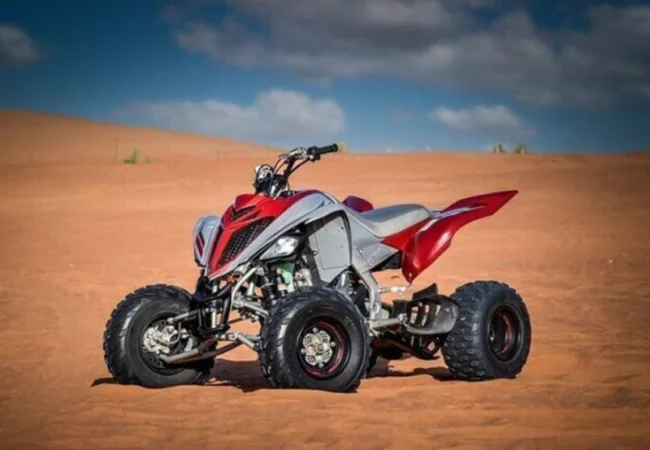
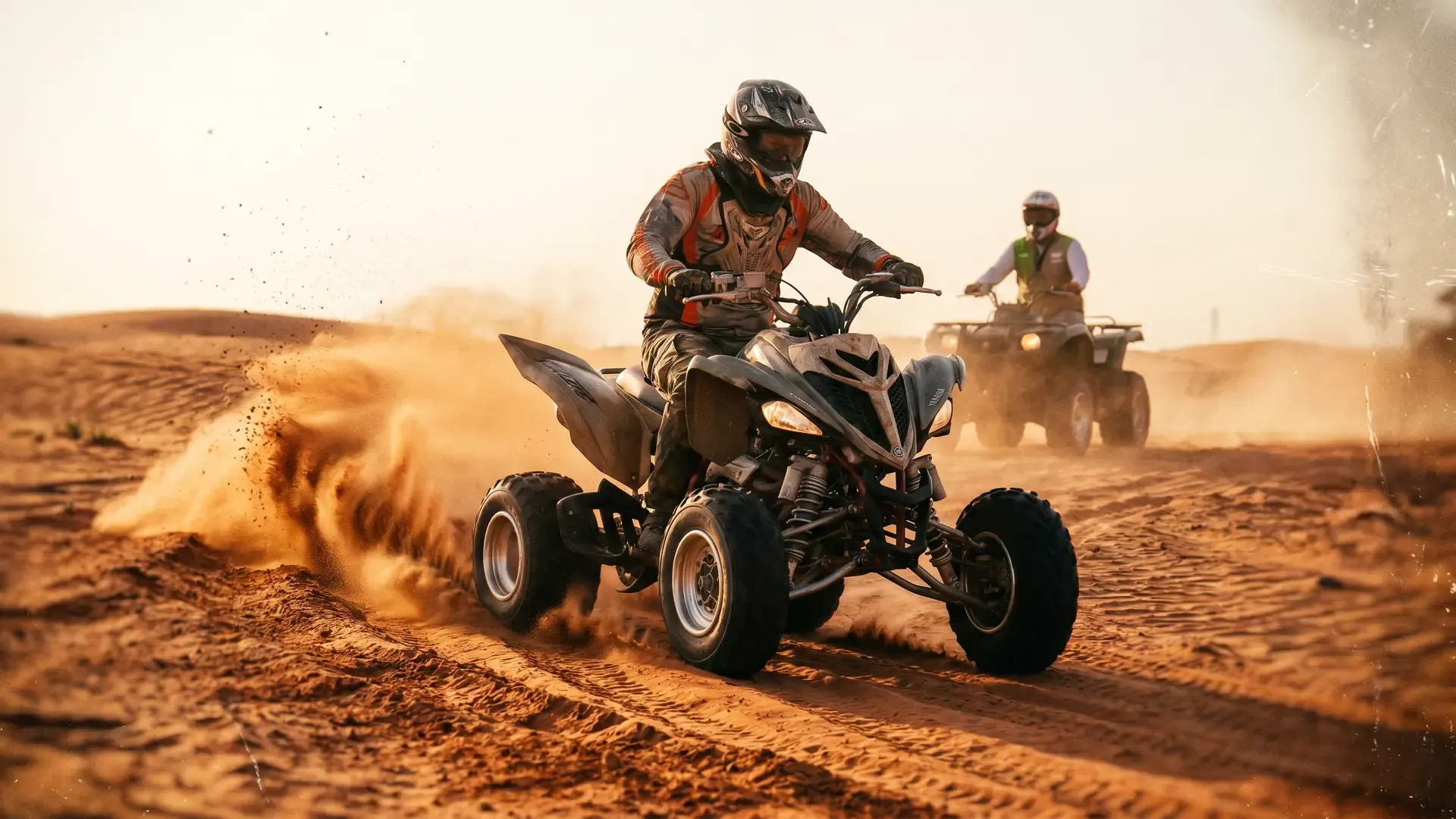
A quad throws sand differently than most people expect before their first session. There is no windscreen and no roll cage the way a buggy has, so anything kicked up by your own front wheels, or by a rider ahead of you on the same line, has a straight path to your legs, chest and face. On the 220cc and 400cc this is mostly a fine, dry dust that brushes off. On a longer or faster session, closer to what the Grizzly or the Raptor 700cc cover, it works in harder, helped along by sweat once the sun is properly up.
Shoes take the worst of it. Closed-toe footwear is required for every booking regardless of machine, and even with that rule followed properly, sand still finds its way in over the ankle during the warm-up lap alone, well before the real dunes start. Socks end up carrying a surprising amount of grit by the end of a standard session, and anyone riding in trainers rather than boots notices it more, since there is less material sealing the gap at the ankle.
The helmet adds its own version of the same problem. It is fitted snugly for safety, which means dust that gets past the visor or under the chin strap tends to stay put against the hairline and the back of the neck rather than brushing away in the wind the way it does on exposed skin elsewhere. Sunglasses under the visor help more than people expect, mostly by keeping grit out of the eyes rather than off the face generally.
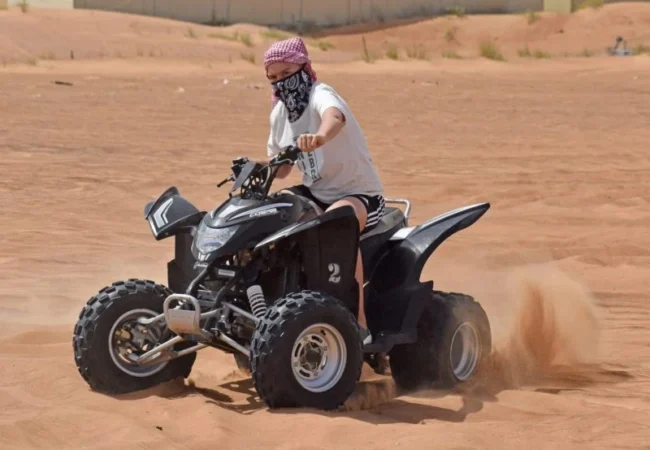
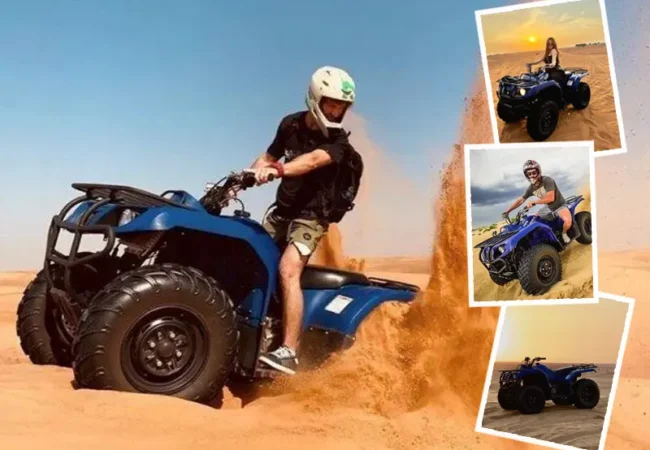
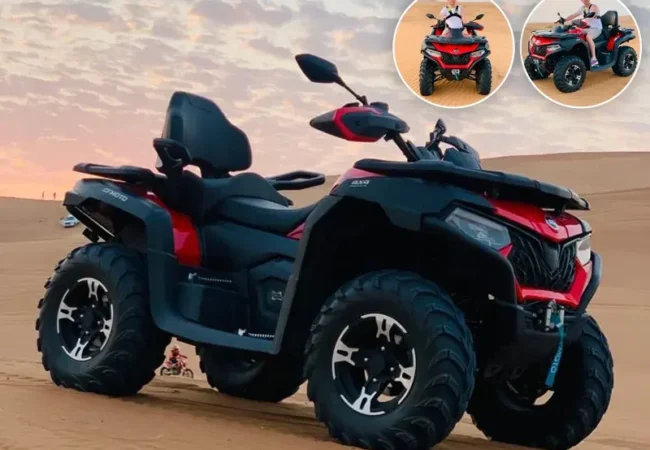
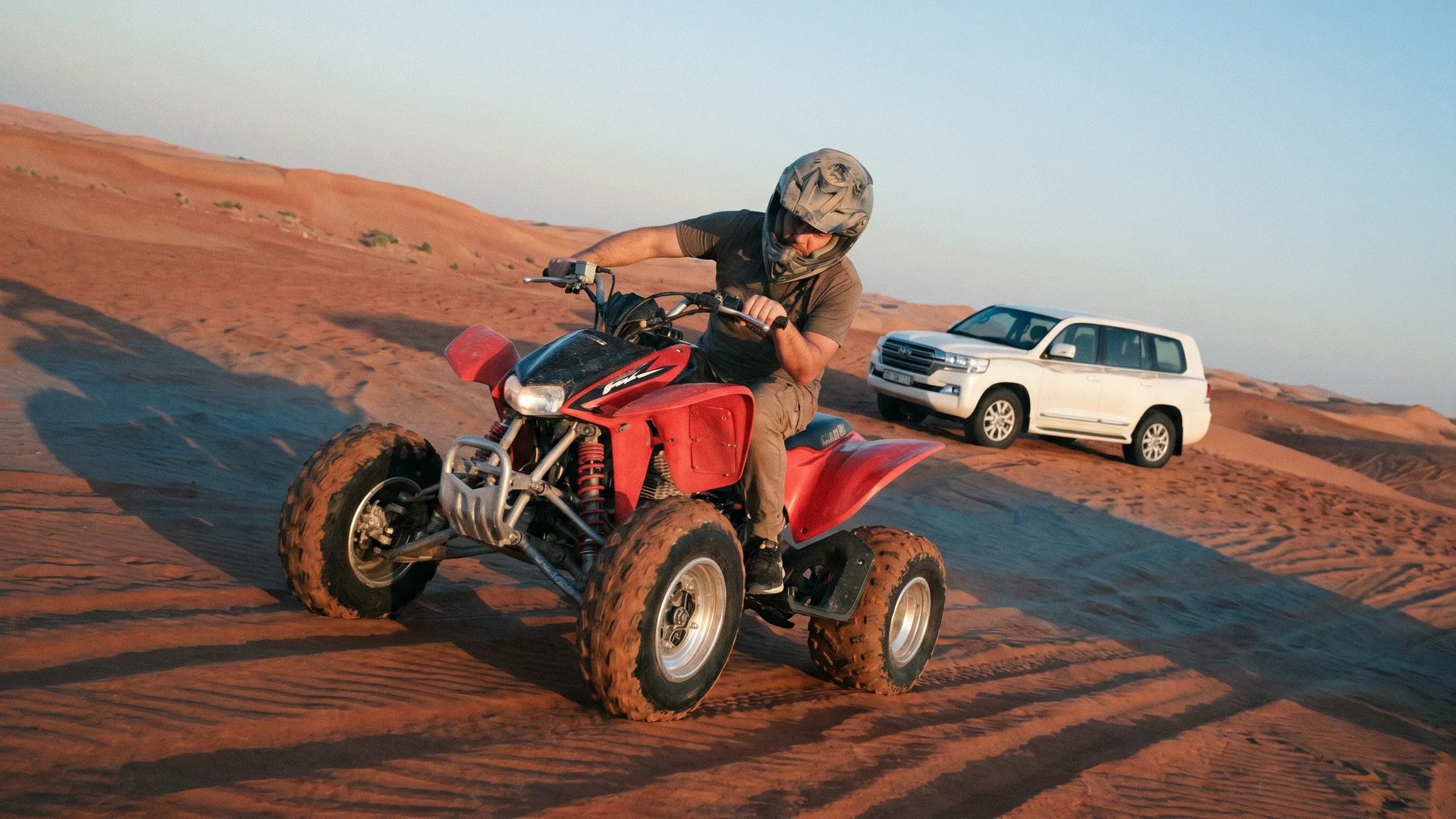
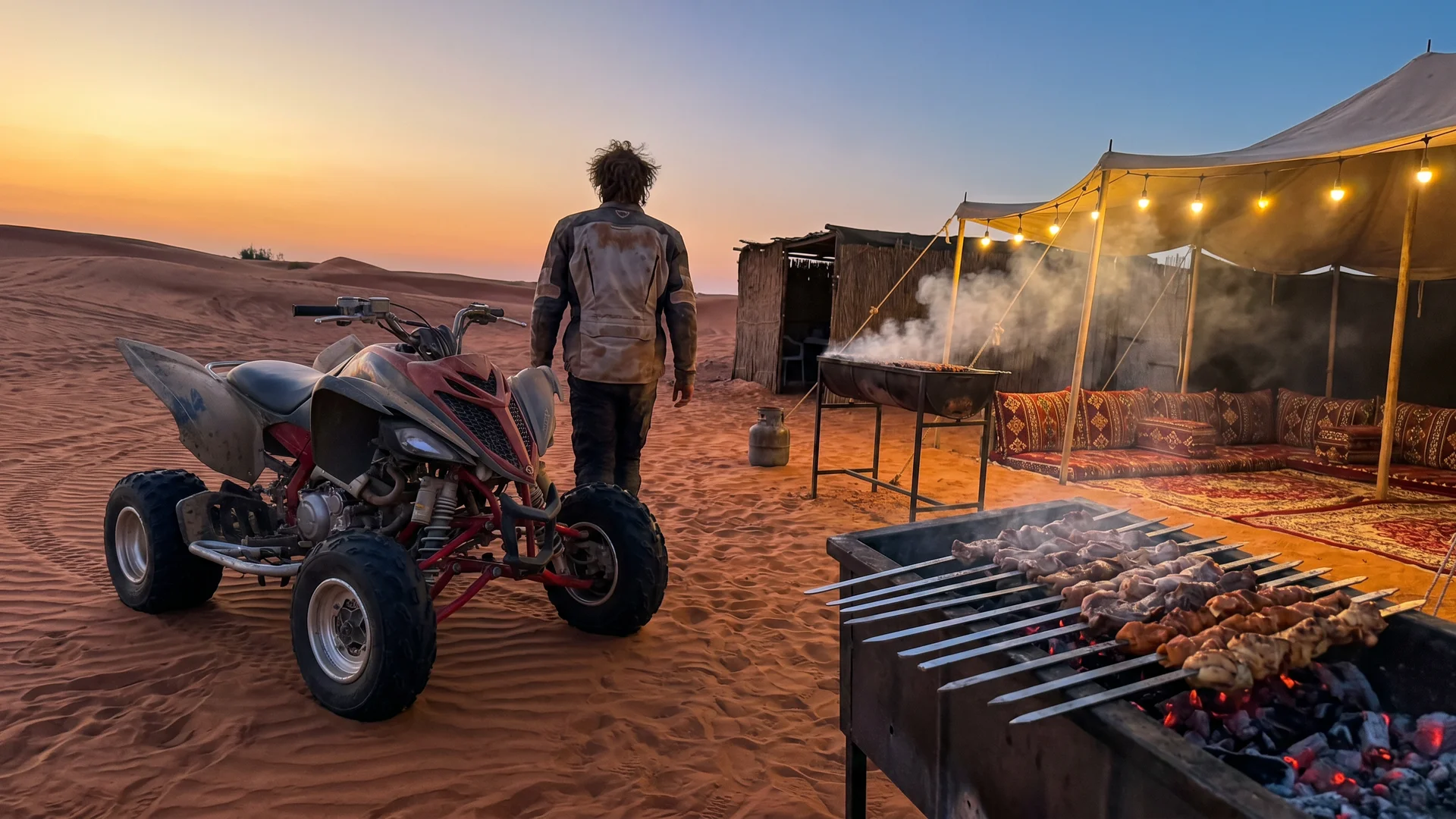
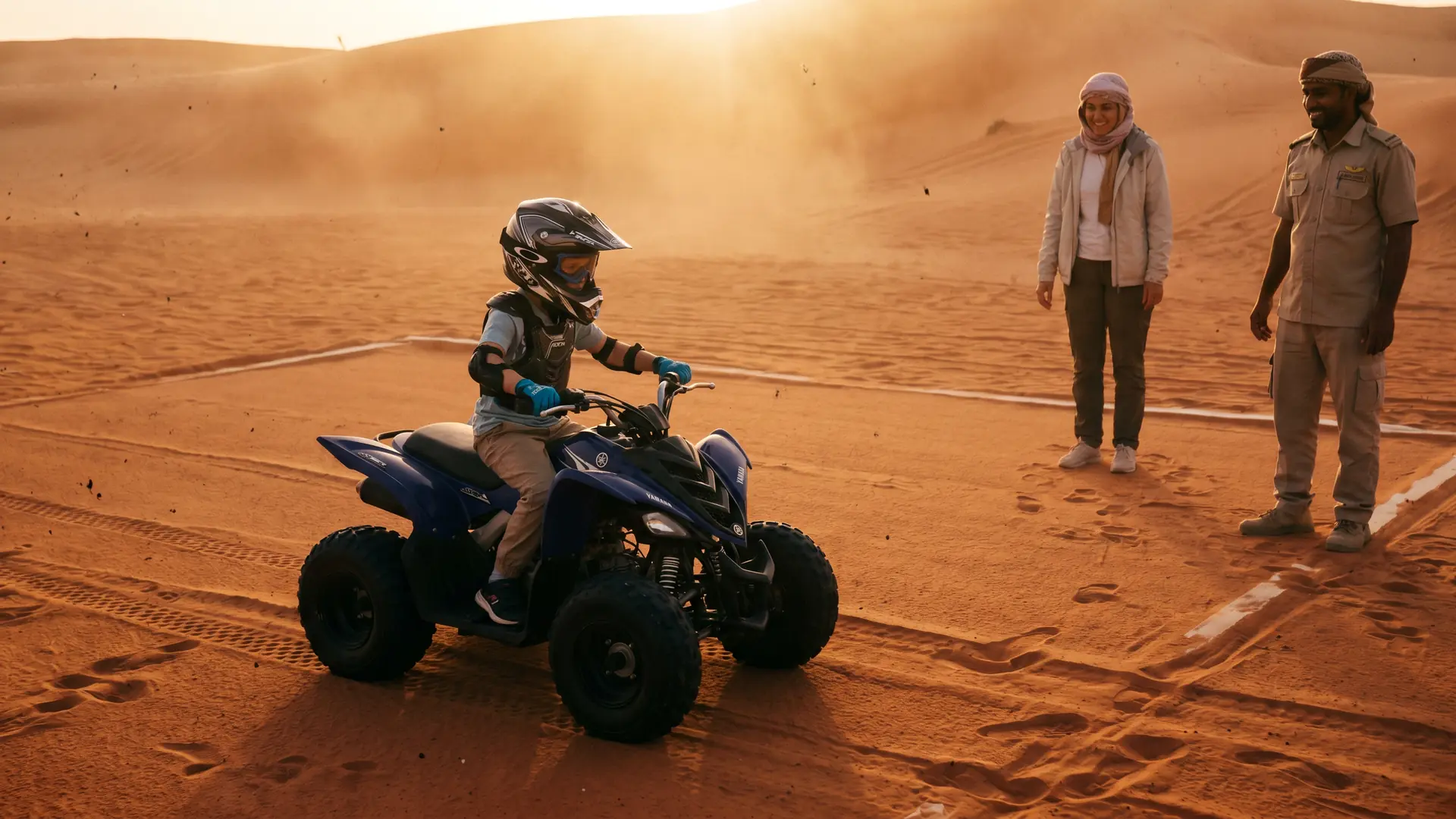
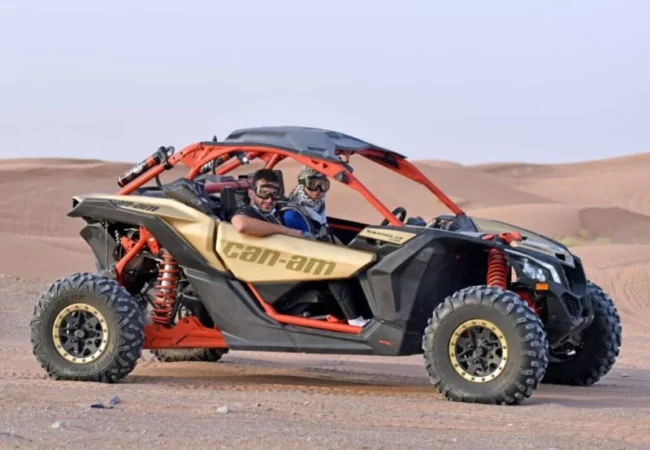
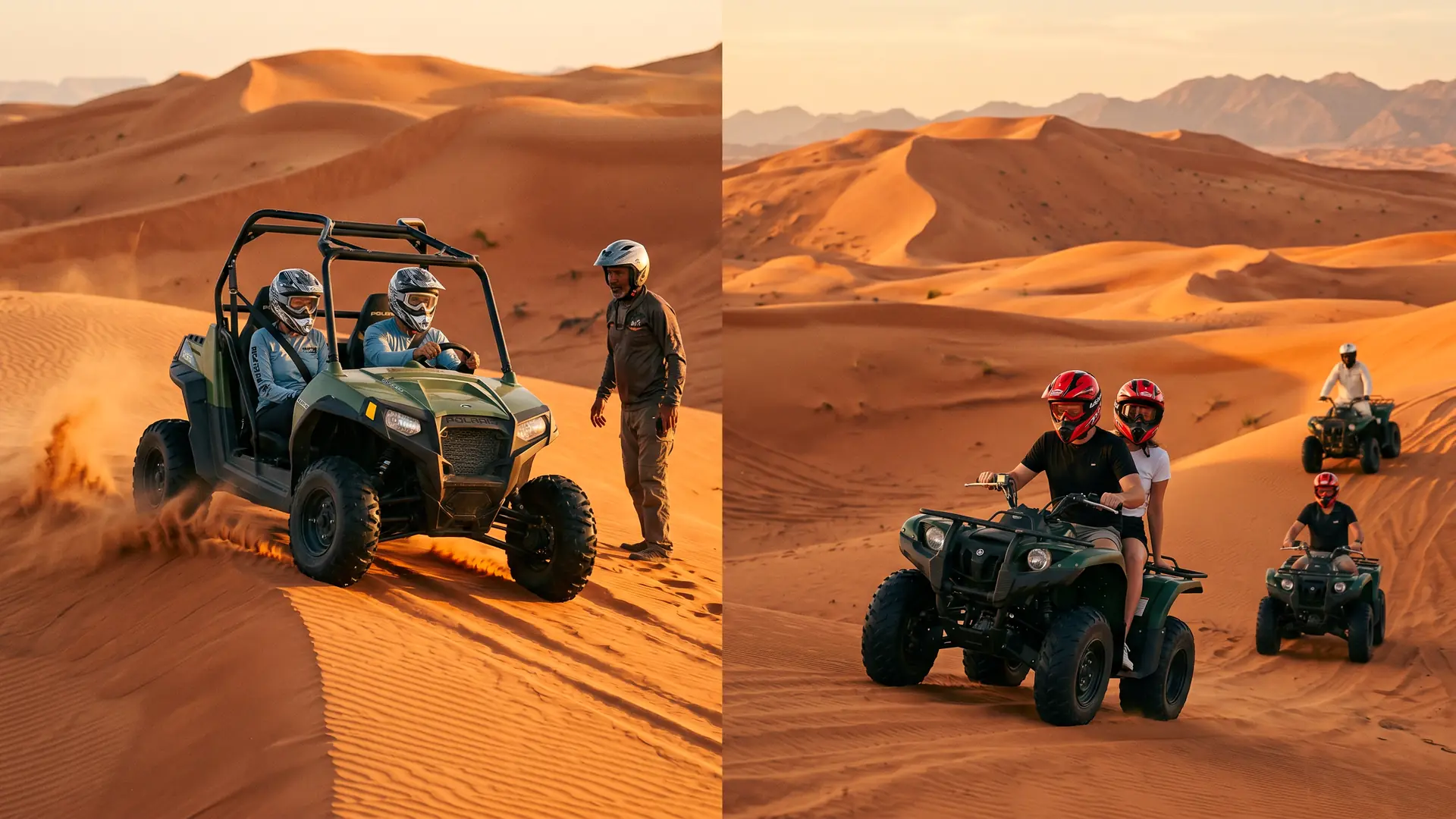
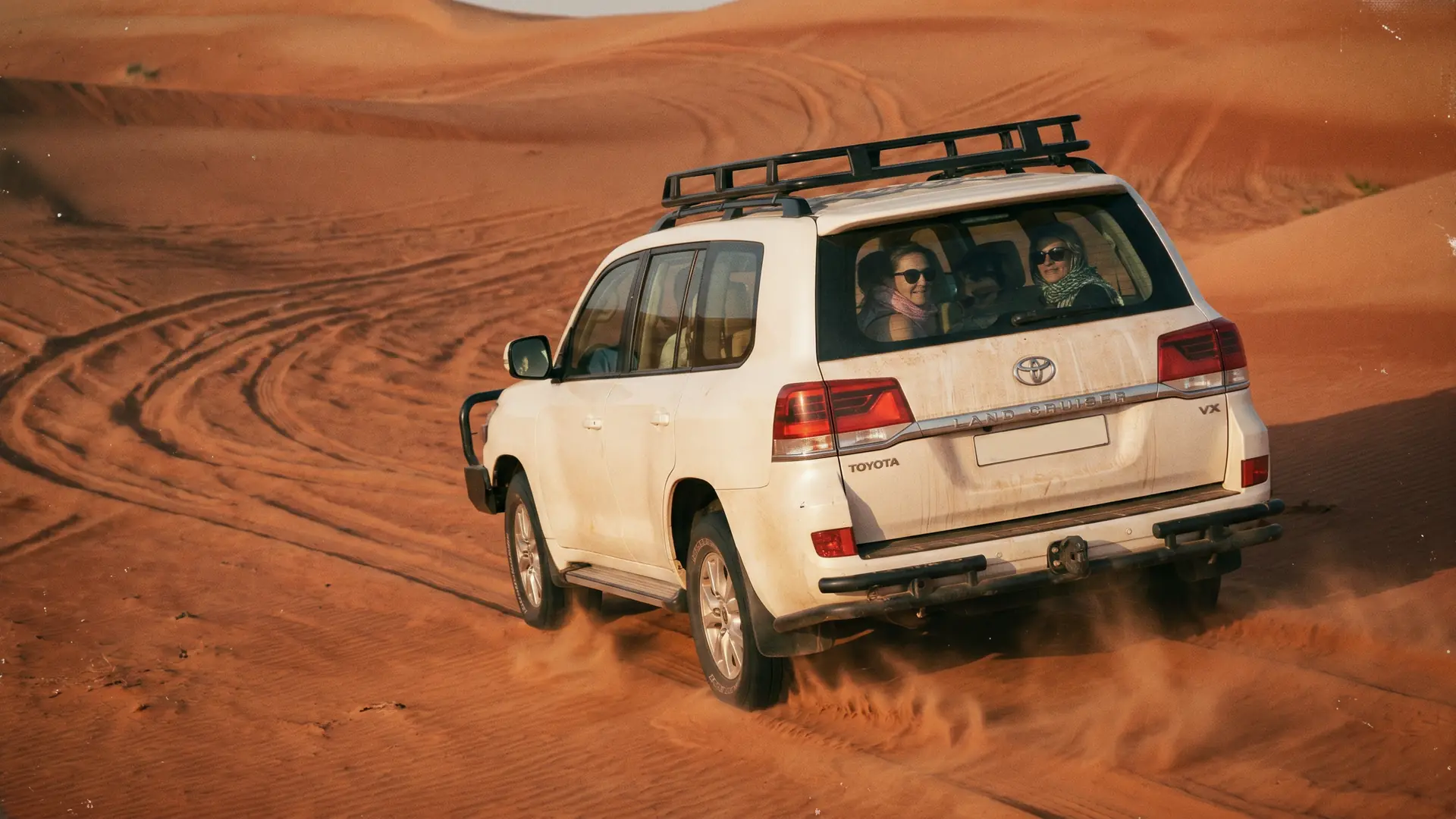
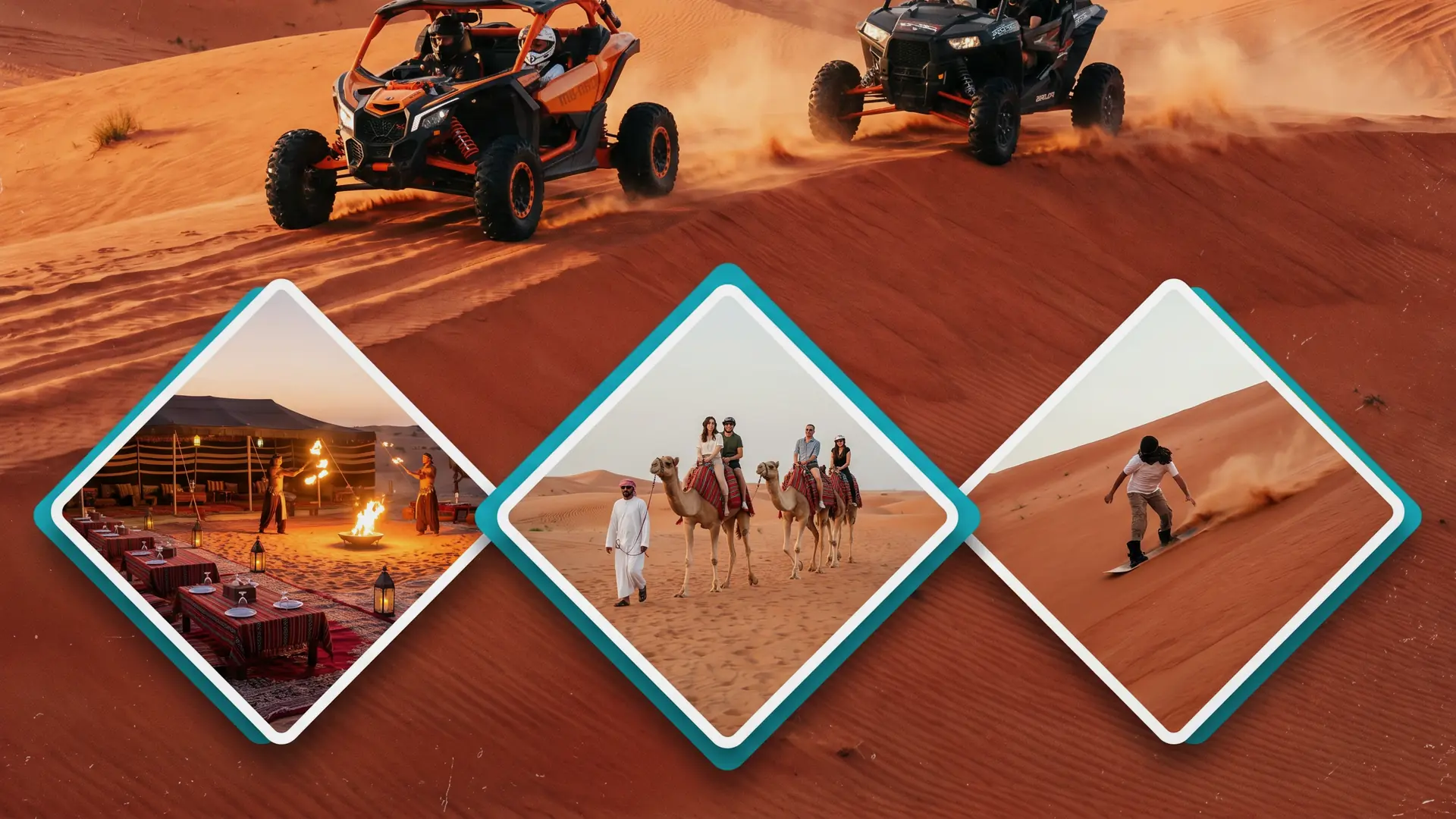
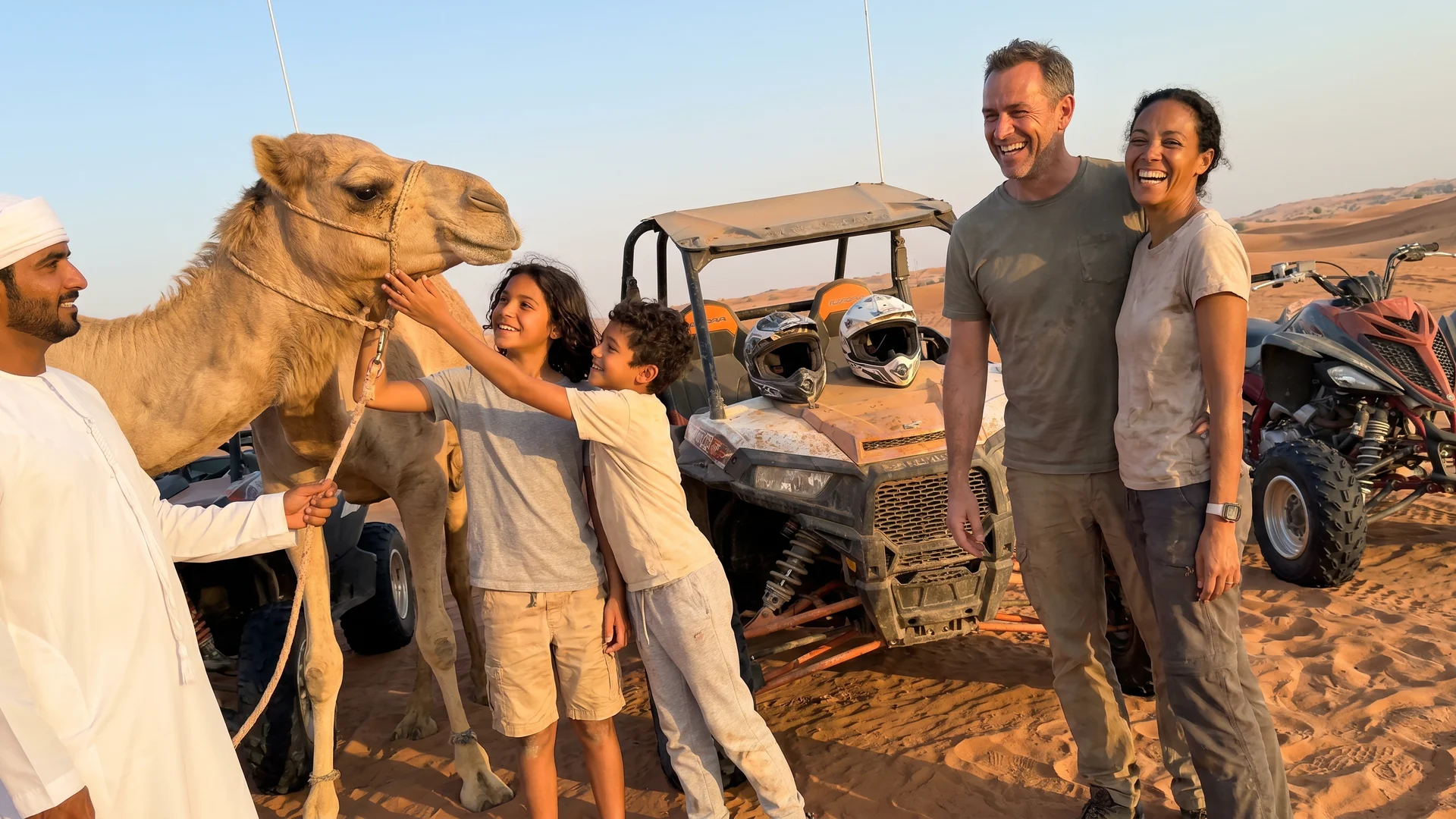
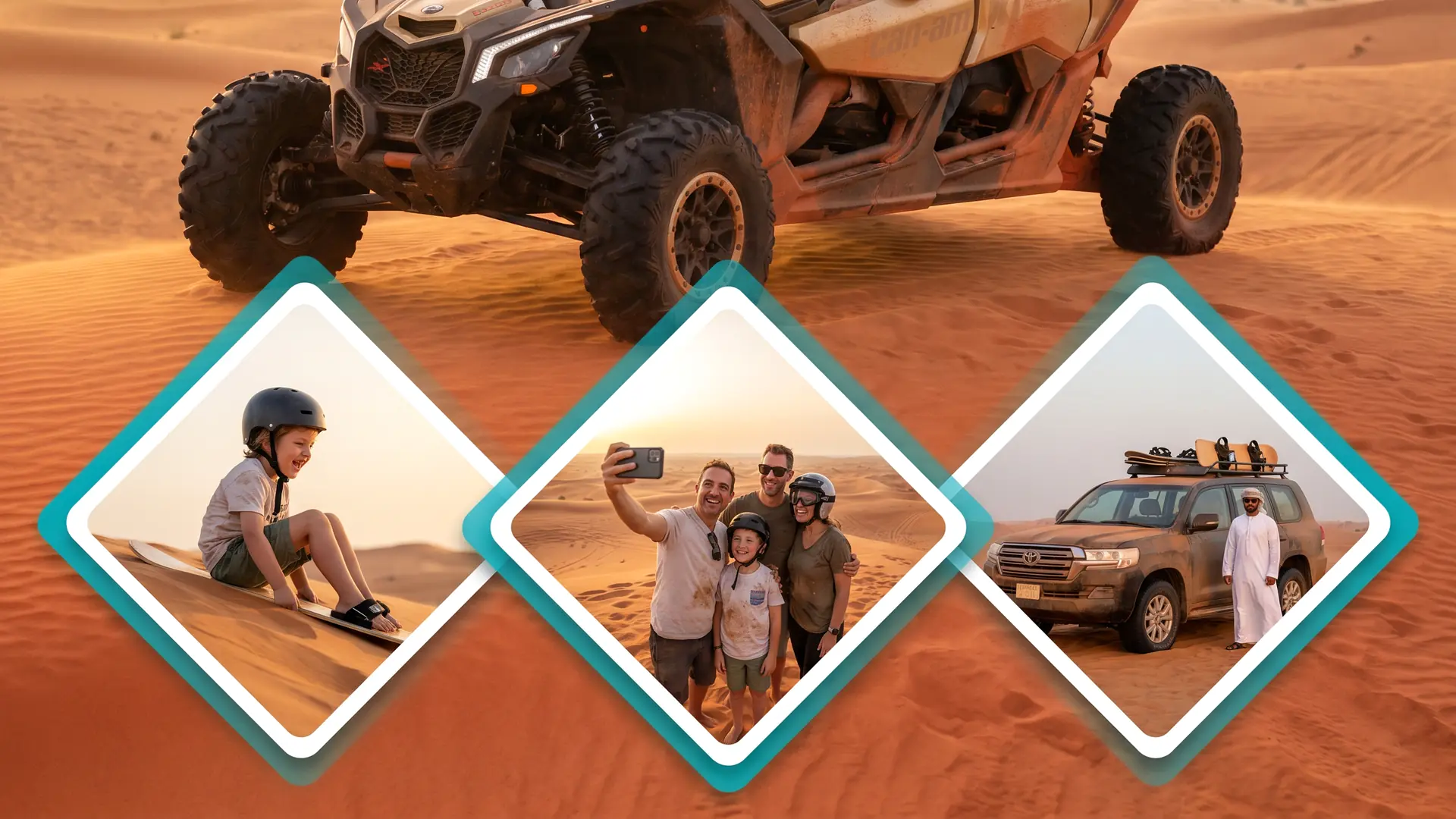
Photos taken during the ride rarely show any of this. Dust looks dramatic and cinematic behind a moving quad, and almost none of it comes across as the actual grit working into your collar at the same moment, which is worth remembering if the photos are the only preview you have seen before booking. Lighter-coloured clothing does not hide it either, and darker fabric is not really better, since red dust shows up pale and chalky against black or navy rather than blending in. Neither choice keeps you clean. It only changes what the dust looks like once you are back.
The practical fix is simple, and most repeat riders already do it: bring a set of clothes you are genuinely fine handing over to the sand for the session, and keep a dry, clean set waiting in whatever vehicle takes you home. Trying to salvage the outfit you arrived in rarely works out, and packing for a full change is far less hassle than discovering the front seats need vacuuming afterward. In the cooler months from October to April, dry sand mostly brushes off before you are back at the vehicle. Deeper into summer, when sessions shift to early morning or the last light of the afternoon to dodge the heat, dust sticks more readily to sweat, and the difference between a quick brush-down and a full change of clothes becomes obvious fast.
Is there anywhere to rinse off or clean up once you're done riding?
Not in the way a resort or a beach club has one. Al Lahbab is an open desert site, not a shower block, so the realistic plan is wipes and hand sanitiser on site, chilled water to drink rather than wash with, and a proper wash once you are back at a hotel or home.
This catches first-timers off guard more than almost anything else on this page. A private desert site out at Al Lahbab is exactly that: sand, a staging yard, and a camp for anyone on a dinner package, not a facility with showers laid on for every quad booking. Chilled water is included with every session, but it is there to drink and cool down with, not to rinse sand off your arms and legs.
What actually works is lower-tech than people expect. Wet wipes or a small pack of tissues in your own bag cover hands and face well enough to be presentable for the ride back. Hand sanitiser deals with grip residue and whatever the handlebars leave on your palms, which is worth having before you touch a phone or eat anything at camp. None of this is supplied automatically, so it is worth packing rather than assuming it will be there.
Helmets are reused between sessions, cleaned and inspected between riders rather than issued as single-use. If a fresh liner or a personal buff under the helmet matters to you for hygiene reasons, packing your own is a reasonable call and nobody will think it strange.
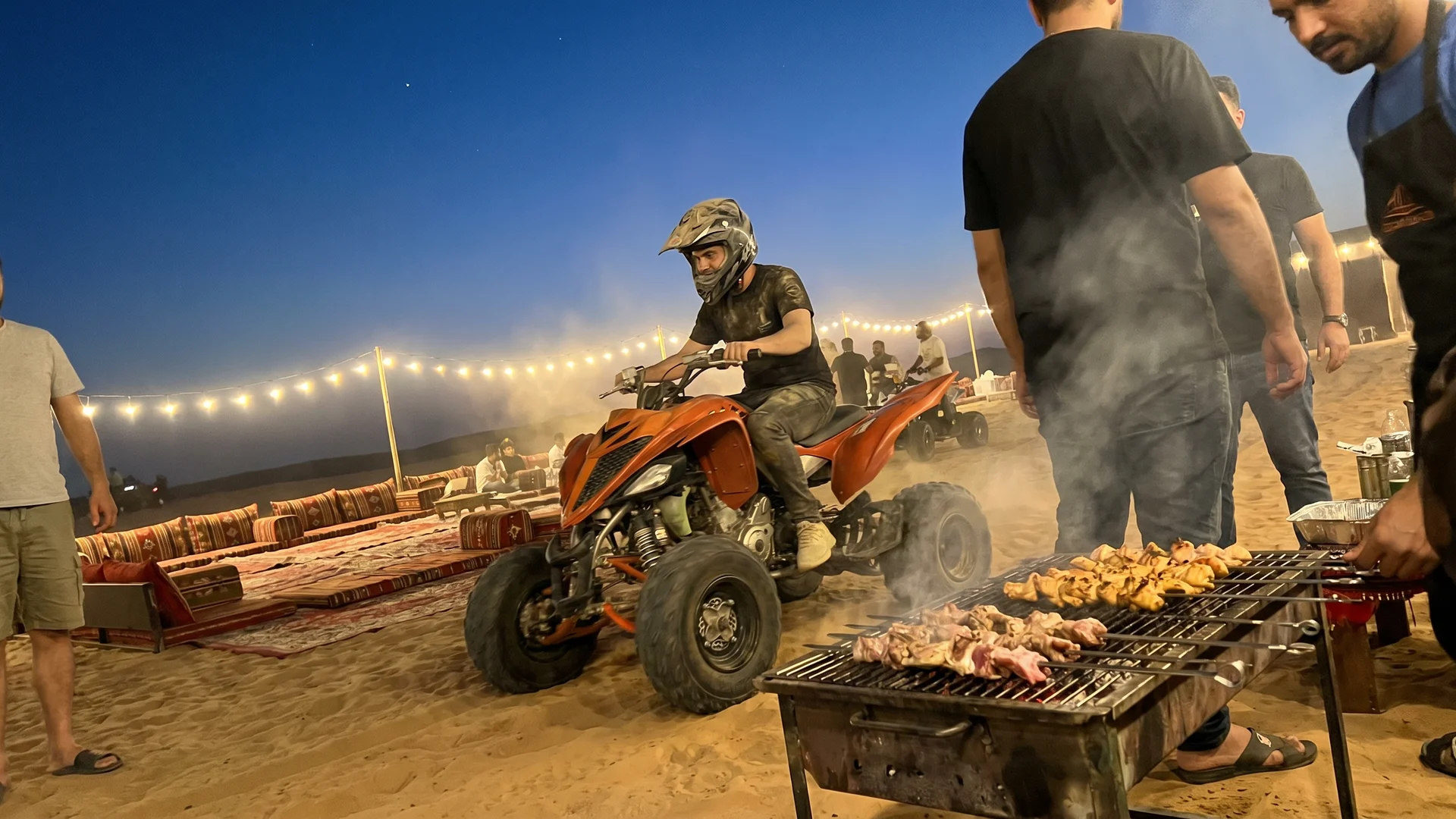
For anyone on one of the safari and BBQ combos, the halal camp has the basics for arriving at dinner reasonably clean, hands and face mostly, not a shower. A proper wash is realistically a hotel or home job, which is one more reason the dry change of clothes covered above is worth having ready rather than optional. Staying reasonably comfortable matters more than staying visibly clean, and that comes down to hydration more than anything else. The water handed out during and after a session does more for how you feel afterward than any amount of wiping down would, particularly in the warmer months when sessions shift earlier or later in the day specifically to manage the heat.
If getting properly clean before an evening plan matters to you, the honest advice is to build in time after the session rather than assuming there is a tap waiting at the site. A morning session gives you the rest of the day to deal with it; an evening session that runs into dinner does not, so plan the wipes and the spare outfit accordingly.
What happens to things you brought but couldn't carry on the quad?
Anything too bulky for a pocket, a day bag, a proper camera, a jacket, stays with your guide or a non-riding companion rather than travelling on the machine. It is informal rather than a numbered locker system, so a quick check with your guide about where things end up is worth the ten seconds it takes, before anyone rides off.
A quad has almost nowhere to carry anything. There is no boot, no glovebox and no rear rack on most of the fleet, which is a real difference from a buggy, where a seat or footwell can absorb a bag without much thought. Whatever will not fit in a zipped pocket needs somewhere else to go before you ride, and figuring that out is worth doing at the briefing rather than mid-session.
In practice, the answer is usually simple: bags, jackets, proper cameras and anything else bulky stay with whoever is not riding, or get left at the staging point with the team running the session. This is closer to informal, verbal coordination than a bag-check counter with numbered tags. If you are riding solo with nobody to hold a bag for you, say so during booking or at the briefing so it is accounted for rather than improvised on the spot.
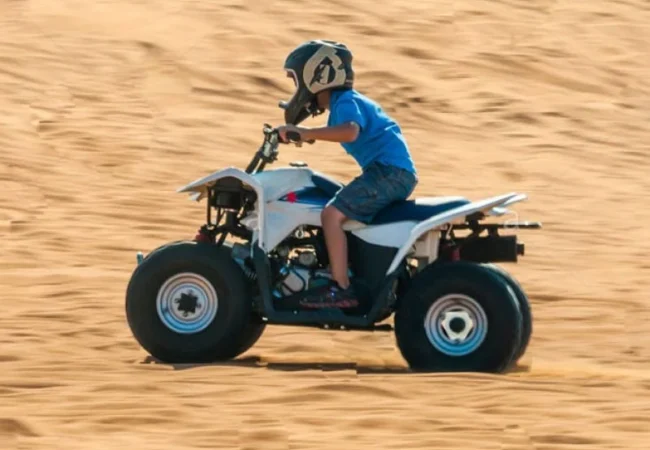
Families running a kids-and-adults session together often end up with whoever is minding the 90cc track also minding bags for the riders out on the dunes at the same time. Worth agreeing who is doing that before the group splits up, not after.
The simplest fix for a lot of this is deciding in advance what genuinely needs to come to the staging area at all. Passports, spare cash beyond what is needed, and anything irreplaceable are usually better left at the hotel safe entirely, which sidesteps the whole question of where they go during the ride rather than solving it on the day.
Money and cards are less of a concern than people assume, since payment happens online in advance to confirm the booking, so there is no cash or card that needs to physically travel with you on the machine. What is actually worth planning around is the phone, since most riders want it accessible for photos rather than locked away with a bag, which is where a wrist strap or a zipped pocket earns its place.
How sore should you expect to be the next day, and for how long?
Forearms, shoulders and the lower back are the usual spots, from gripping the bars and absorbing bumps through your body rather than a suspension seat doing the work. A day or two of stiffness is normal after a standard session; three or more, especially after a longer route or a first go on a bigger machine, is not unusual either.
Riding a quad is more physical than it looks from the outside, and the soreness the next morning tends to surprise first-timers more than experienced riders. A quad has no cushioned seat absorbing bumps the way a car, or even a buggy, does. Your arms, core and legs are doing that job instead, bracing through every dip and rise, which is why the forearms and shoulders are usually the first places people notice it.
How much depends heavily on the machine and the route. A single loop on the 220cc at a gentle pace leaves most riders with mild, forgettable stiffness. A longer session on the Grizzly 450cc, or a first attempt on something with real power like the Sports 625cc or the Raptor 700cc, tends to leave more behind, particularly through the forearms from gripping harder than necessary and the lower back from unfamiliar body positions on climbs.
Age and general fitness affect this less than people expect. Riders in reasonable shape who simply have not gripped handlebars for an hour in years tend to feel it about the same as younger first-timers, since the muscles involved are not ones daily life typically works.
One day of stiffness is the common outcome for a standard session on a mid-range machine. Two to three days is realistic after a longer route, a hotter day, or riding on legs that were not warmed up beforehand. None of this is a sign anything went wrong. It is closer to what a first gym session or a long hike produces, muscles doing unfamiliar work rather than any kind of injury. A short stretch before the warm-up lap, hips, shoulders, wrists, is not something guides formally walk you through, but riders who already do it on their own report noticeably less stiffness the next day. It costs nothing and takes under a minute, which makes it one of the few genuinely free ways to soften the aftermath.
The practical advice riders wish they had heard beforehand: keep the day after a session light if you can, stay on top of water before and after rather than only during, and do not schedule the KTM or a repeat quad session for the very next morning unless you already know how your body handles it. Riders who pair a quad with a desert safari the same evening report less next-day soreness than those who ride twice in two days.
Is there somewhere secure to store a bag or valuables during your session?
Small items, phone, keys, wallet, fit in a zipped jacket pocket or a slim bag worn across the body while riding. Anything larger goes with the team at the staging point rather than on the machine itself, since there is nowhere built into a quad to lock a bag away.
Unlike a car or a locker room, a quad bike staging area does not come with secure storage in the way people picture it. There is no locked box handed out with your helmet. What exists instead is a mix of what you can carry safely on your own body and what gets left, informally, with the team running the session while you are out on the dunes.
For small essentials, phone, room key, a slim wallet, a zipped pocket in a jacket works, and a cross-body bag is a step up from that if you are riding with more than pockets can hold. Loose items in an open pocket are a genuinely bad idea on a quad, since the position you ride in and the bouncing over rough sand will eventually shake something free without you noticing until you are back and reaching for it.
For anything you would be upset to lose, passports, larger amounts of cash, a proper camera body, the honest answer is to not bring it to the staging area at all, or to hand it to a non-riding member of your group before you set off. This matters more for a solo rider with no one to leave things with, and it is worth mentioning at booking if that describes your situation, so the team knows to make arrangements rather than you working it out alone on the day.
Anyone arriving by pickup vehicle has one advantage worth using: the vehicle itself. A locked car is a genuinely secure option for anything you would rather not carry or hand off, and it beats an improvised arrangement at the staging area for real valuables, provided the driver is staying with the vehicle during your session.
The site itself, covered in more detail in the where we ride section above, is a working staging yard rather than a hotel lobby or a mall, so secure storage here means cooperating with your guide rather than finding a locker with a key. None of this is a design flaw specific to this operator. It reflects what an open desert booking actually is, and planning around that reality makes the whole session easier than expecting facilities that were never part of the experience.
What do most riders actually do right after their session, before heading back?
Helmets off, a few minutes with water while the guide runs through how the session went, then either the transfer home or straight into whatever combo comes next. It is a short, informal wind-down, not a scheduled activity, and it is worth not rushing through it.
The stretch right after a session is easy to overlook when you are picturing the booking beforehand, but it is a real part of the visit. Engines go off, helmets come off, and the guide hands round water while everyone catches their breath. This lines up with the return step covered earlier on this page, though what it actually feels like on the ground is less structured than a checklist makes it sound.
Alongside the water, there is usually a short, informal conversation about how the ride went. Nothing formal, more like a quick word from someone who was watching the whole time: what you handled well, whether the machine suited you, and whether a bigger quad makes sense on a future visit. Riders who plan to come back tend to find this more useful than they expected going in.
From there, what happens next depends entirely on what was booked. A standalone session moves straight into the drive home, whether that is a transfer or your own car, and that is usually when most people realise how much sand made the trip with them. Anyone on an evening safari and BBQ combo continues more or less straight into camp instead, which is part of why the clothes and clean-up questions covered earlier on this page matter more for that package than for a quad session on its own.
The drive back, whether it is a transfer or your own car, tends to be where the actual conversation happens. Riders compare which machine felt best, argue gently about who handled the dunes better, and generally do more talking about the session in that twenty minutes than they did during the ride itself, when concentration was elsewhere.
Photos, if your guide took any during the ride, typically come up around this point too, shown on a phone or shared rather than sent days later. It is worth asking if nobody mentions them, since it is an easy detail to lose in the moment, especially on a booking moving straight into a combo where everyone's attention shifts to dinner, a detail riders mention often in the reviews on this page. Some riders head straight into an evening plan elsewhere in the city, realistic on a standalone session finishing with enough daylight left. Anyone who booked a combo running into dinner has less flexibility here, since the schedule is already set by the camp rather than by personal preference.
Does the desert dust actually get into things like your phone, camera and ears?
Yes, more than most people plan for. Fine red dust gets past phone case seams, into ear canals during a fast stretch, and into camera bodies left open even briefly. A sealed pocket or a proper case, plus a moment's care with anything electronic, prevents most of it.
This is one of the more common surprises reported after a first session, including by riders who already expected to get dusty. Al Lahbab's sand is fine enough to behave almost like a dry powder at speed, and it does not stay on the surface of things the way coarser sand does. It works into gaps that look sealed until you actually check them afterward.
Phones are the most common casualty. A case that seems snug can still let dust in around the charging port, the buttons or the camera housing, especially if it spends the ride loose in a pocket rather than in a proper zipped compartment. Riders who film with a phone on a mount report the same issue around the mount's seams. A dedicated wrist strap or chest mount, plus a case with sealed ports, cuts this down significantly, worth weighing up in the machine-picking section above alongside everything else before you book.
Ears pick up more than people expect too, mostly on faster machines where wind and speed both increase. It is rarely more than mild irritation, but riders with sensitive ears or existing ear issues sometimes feel it for the rest of the day. A buff or scarf pulled up over the lower face helps here as much as it does with breathing in dust generally.
Anyone wearing hearing aids or prescription glasses with an open frame should mention it at the briefing. It is not a reason to sit out a session, but the guide can offer a tip on wind direction or route pace that reduces how much reaches sensitive gear, which is not something most riders think to ask about beforehand.
Proper cameras are the item worth the most caution. Opening a camera body to change a lens or a card anywhere near the staging area, even briefly, is asking for dust in the sensor housing, a genuinely expensive mistake compared to everything else on this page. Laptops, tablets and anything else electronic have no reason to be anywhere near the staging area in the first place, and leaving them at the hotel avoids the question entirely. If a real camera is coming along, keep lens changes for the vehicle or somewhere enclosed, not out on the sand between runs.
People also search for
Guide FAQ
Can I leave a change of clothes at the site during my session?
Yes. Hand it to your guide or a non-riding companion at the briefing. There is no locker, but it is a completely normal request and the team is used to it.
Do I need to bring my own water, or is it provided?
Chilled water is included with every booking regardless of duration. Bringing extra of your own is fine too, just plan somewhere to carry it while you ride.
Is there any shade at the staging area?
Some, depending on the day and setup, but do not count on much. Midday sessions get pushed toward sunrise or the last hour of daylight once summer heat sets in, largely for this reason.
Can I wear a GoPro or action camera on my helmet?
Yes. Flag it during the briefing so your guide is aware of what is attached to the machine and where, the same as they would ask on a buggy.
What happens if my sunglasses fall off mid-ride?
The guide will stop so you can retrieve them if it is safe to do so. Sunglasses with a retention strap avoid the problem entirely.
Is there a locker or bag tag system, like at a gym?
No. There is no numbered system. Storage is informal cooperation with your guide or a non-riding companion, not a lockable facility.
Is the dust worse on some quads than others?
Yes. Lighter, faster machines like the Sports 625cc and the Raptor 700cc tend to kick up more than the 220cc or the supervised 90cc track.
Can I skip riding and just watch someone else's session?
Yes, non-riders are welcome to wait at the staging area, though there is little shade and no formal seating, so plan for that.
Will my shoes be ruined after one session?
Not usually. A proper brush and shake-out gets most sand out of closed shoes. Suede or fabric sneakers show it more than boots or trainers with a tighter weave.
How long before the sand is fully out of my clothes?
A normal wash cycle handles most of it. Riders who just shake clothes out instead of washing them sometimes find sand reappearing in a bag or suitcase for days afterward.
 AED 150